Learn how U.S. organizations can choose front-end, back-end, database, integration and cloud technologies around real business requirements.
Choosing a web development technology stack is one of the highest-leverage decisions in a digital project because it shapes performance, security, hiring, integration effort, maintenance and the speed at which teams can release new features. The wrong choice may work at launch but become expensive when traffic grows, requirements change or the platform needs to connect with more systems.
For U.S. organizations, the right stack should support the product’s actual operating model rather than mirror what is fashionable in the developer community. A customer portal serving enterprise users has different requirements from an ecommerce storefront, SaaS dashboard or marketing website. The technology stacktherefore needs to fit the business problem, internal capability and expected growth path.
What a Technology Stack Actually Includes
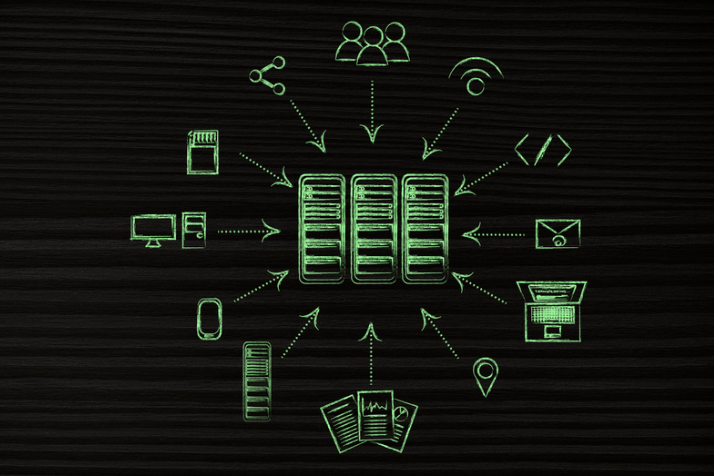
A website technology stack is the combination of technologies used to deliver the front end, application logic, data layer, integrations and infrastructure behind a digital product. It can include a browser framework, server-side language or runtime, database, content platform, API layer, cloud environment, testing tools and deployment pipeline.
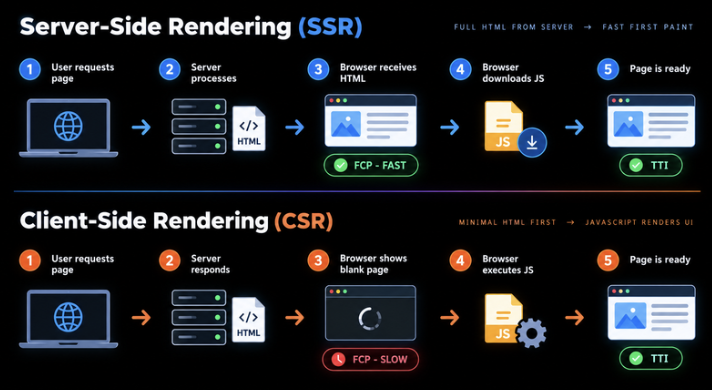
These choices are connected. A front-end framework affects how pages are rendered. Back-end architecture affects API response times. Database design influences data integrity and query performance, while hosting and deployment choices affect resilience and release speed.
A strong architecture is not defined by using the newest tools. It is defined by how well the parts work together.
For businesses considering whether standard platforms provide enough flexibility, the benefits of custom website development provide useful context for deciding when a more tailored architecture is justified.
Start With Business Requirements Before Comparing Frameworks
Technology selection should begin with business and operational requirements, not a preferred programming language.
Leaders and delivery teams should clarify:
- who will use the product;
- the critical customer journeys;
- expected traffic patterns;
- data sensitivity and access requirements;
- required third-party integrations;
- content management needs;
- geographic reach;
- internal technical capability;
- expected release frequency;
- long-term support expectations.
A technology stack for a content-heavy B2B website may prioritize editorial flexibility, search performance and straightforward integrations. A SaaS application may place more weight on authentication, application state, APIs, tenant isolation and observability. An ecommerce platform may need strong catalog, payment, inventory and order-management integrations.
The business model should narrow the technical options before engineering teams compare frameworks.
Organizations deciding how content should connect with application services may also benefit from the comparison of headless CMS and traditional CMS before fixing the front-end architecture.
Compare Each Layer Against Clear Decision Criteria
The best web development tech stack is rarely one predefined combination. Teams should evaluate each layer against consistent criteria rather than selecting technologies individually.
| Layer | Common options | Questions to assess |
|---|---|---|
| Front end | React, Next.js, Vue, Angular, server-rendered frameworks | Does it support performance, accessibility, SEO and the required interaction model? |
| Back end | Node.js, .NET, Java, Python, PHP | Does the team have expertise, and can it support the required APIs and business logic? |
| Database | PostgreSQL, MySQL, SQL Server, document databases | What consistency, query, reporting and scaling requirements exist? |
| CMS | Traditional, headless or custom content layer | How much control do editors need, and where will content be reused? |
| Infrastructure | Cloud, managed hosting, containers, serverless services | What availability, deployment and scaling model is appropriate? |
| Integration | REST, GraphQL, queues, webhooks | How will external platforms exchange data reliably? |
| Delivery | CI/CD, automated testing, monitoring | How quickly and safely must teams release changes? |
The technology stack should be evaluated as a system rather than as isolated product choices. A framework that looks efficient on its own may be a poor fit if it creates unnecessary integration complexity or requires expertise the organization cannot sustainably maintain.
Architecture decisions should reduce operational friction as well as meet technical requirements.
Balance Performance With Development Complexity
Performance matters, but performance problems are not solved simply by changing frameworks. Page speed can be affected by front-end JavaScript, server response times, database queries, media delivery, third-party scripts and network architecture.
A useful approach is to define performance targets early and identify which parts of the system materially affect them. Teams can then choose rendering approaches, caching strategies, database patterns and infrastructure based on measurable requirements.
The guide explaining why website speed matters for businesses provides further context for treating performance as a business requirement rather than a post-launch optimization task.
Do not accept major architectural complexity for performance benefits the product does not actually need.
For many business websites, a simpler architecture that is easy to maintain can outperform a sophisticated design that requires constant specialist intervention.
Plan for Integrations Before Development Starts
Most modern digital products do not operate alone. Websites may connect with CRM, ERP, payment systems, identity providers, analytics tools, marketing platforms, inventory systems or proprietary business applications.
Integration requirements can significantly change the technology stack decision. A business with extensive enterprise systems may value a different back-end environment from a startup building primarily around JavaScript services. A company with complex data-processing workloads may favor technologies supported by mature libraries and existing engineering expertise.
Before selection, map:
- systems that must connect at launch;
- systems likely to be added later;
- data that moves in each direction;
- synchronization and latency requirements;
- failure and retry behavior;
- security and authentication requirements;
- ownership of each integration.
Integration architecture should be treated as a first-class design concern, not an implementation detail added after the website is built.
This planning is especially important for U.S. organizations that operate across several business units or locations, where CRM, finance, customer-service and operational systems may already contain overlapping customer information.
Consider Security Across Every Layer
Security requirements affect architecture from the browser to the database and infrastructure layer. Authentication, authorization, API design, dependency management, secrets, data storage, logging and deployment processes all contribute to the risk profile.
A technology stack should have a mature security ecosystem, actively maintained dependencies and a practical update path. Teams should also consider whether they possess the skills to configure and operate those technologies securely.
Security becomes particularly important when a website processes customer accounts, payments, commercially sensitive information or personal data. The guide on protecting your website from cyber attacks offers additional context for building security into the wider delivery model.
Choosing technologies that the team can operate securely is often more sensible than introducing complexity without sufficient operational expertise.
Choose Infrastructure That Matches Real Demand
Cloud platforms give teams access to managed databases, storage, compute, monitoring and deployment services, but using more cloud services does not automatically create a better architecture.
The infrastructure model should reflect actual availability, scale and operational requirements. Some applications benefit from containers and independently scalable services. Others can remain simpler with managed hosting, a conventional application layer and a relational database.
For organizations serving customers across different U.S. regions, infrastructure decisions can also account for latency, resilience, deployment strategy and reliance on third-party services. The article on cloud development for Chicago businesses provides additional context for evaluating cloud-based delivery.
The objective is sufficient scalability without unnecessary operating overhead.
U.S. Scenario: A Multi-State B2B Customer Portal
The following scenarios are illustrative examples rather than Dev Centre House client case studies.
Consider a professional services company operating across New York, Texas, Illinois and California. It wants to replace disconnected forms and spreadsheets with a customer portal supporting authentication, document exchange, service requests and CRM integration.
The technology stack should be selected around those workflows. The business may prioritize a responsive front end, structured API layer, relational database for account information and cloud environment that supports controlled deployments and monitoring.
The decision should also account for the people who will maintain the product. If the internal engineering group already has strong expertise in a particular enterprise ecosystem, adopting an entirely different back-end environment may introduce recruitment and support costs without creating a meaningful customer benefit.
Technical consistency and maintainability can be more valuable than choosing the theoretically most advanced framework.
U.S. Scenario: A SaaS Platform Preparing to Scale
A U.S. SaaS company may have an MVP built quickly by a small team. As adoption increases, the product gains billing, analytics, permissions, integrations and increasingly complex reporting.
Instead of replacing the entire technology stack, the first step should be identifying where the actual constraints sit. Slow reporting may be a database-design issue. Difficult releases may come from weak automated testing. Integration failures may require clearer API contracts rather than another programming language.
Teams can then modernize specific layers while protecting parts of the platform that continue to work effectively. This reduces migration risk and prevents an ambitious rewrite from becoming disconnected from commercial priorities.
Organizations deciding whether specialist external capacity is required can compare in-house and outsourced website development as part of their delivery planning.
Assess Team Capability and Long-Term Maintainability
A technically impressive platform has limited value if an organization cannot hire for it, maintain it or understand it several years later.
Evaluate:
- existing engineering expertise;
- availability of suitable developers;
- framework and library maturity;
- documentation quality;
- upgrade paths;
- testing ecosystem;
- community and vendor support;
- ease of onboarding new team members.
The selected stack should also reduce avoidable dependency on individual developers. Architecture decisions, integration contracts, deployment processes and operating procedures should be documented so important knowledge remains with the organization.
Maintainability is a business continuity issue, not simply a developer preference.
Use a Structured Selection Process
A practical selection process can prevent architecture discussions from becoming opinion-based.
- Define business and user requirements.
- Identify non-negotiable security, integration and performance needs.
- Document internal engineering skills and support capacity.
- Shortlist realistic front-end, back-end, database and infrastructure options.
- Evaluate trade-offs using consistent criteria.
- Prototype uncertain or technically risky areas.
- Estimate implementation and long-term operating costs.
- Define testing, deployment and monitoring requirements.
- Record the reasoning behind major architecture decisions.
The final architecture should be explainable in business terms. Leaders should understand not only what technologies have been selected but why those choices reduce risk, improve customer journeys or make future development easier.
How Dev Centre House Can Support Web Architecture in the United States
Dev Centre House can support U.S. organizations with discovery, requirements analysis, architecture assessment, front-end and back-end development, API integration, cloud planning, testing and modernization.
When selecting a web architecture, the engagement can begin with user journeys, business constraints, integration requirements and internal capabilities before individual frameworks are compared. Areas of uncertainty can then be prototyped and tested before significant development investment is committed.
Where an existing platform has grown difficult to maintain, the assessment can also identify whether specific layers should be modernized instead of replacing the complete system. The aim is to reduce technical uncertainty while preserving technology that continues to provide business value.
Conclusion
Choosing a web development stack should not become a popularity contest between programming languages or frameworks. It is a business architecture decision affecting delivery speed, user experience, security, performance, integrations and long-term ownership.
For U.S. organizations, the strongest technology stack is the one that matches the product’s actual requirements, works with available engineering capability and leaves enough flexibility for future growth. Start with the journeys and constraints that matter, compare options consistently and choose the simplest architecture capable of supporting the business with confidence.
FAQs
1. What is a Technology Stack in web development?
It is the combination of front-end, back-end, database, integration, infrastructure and delivery technologies used to build and operate a web product.
2. Which programming language is best for a business website?
There is no universal best language. The decision should consider functionality, existing expertise, integrations, maintenance requirements and the wider architecture.
3. Should a company use the same web development tech stack as its competitors?
Not necessarily. Competitors can have different systems, engineering teams, budgets and growth requirements even when their websites appear similar.
4. How important is cloud infrastructure when choosing web technologies?
It can be important for deployment, scalability, resilience and managed services, but the infrastructure model should match real application requirements rather than add complexity by default.
5. When should a business reconsider its website architecture?
A review can be useful when performance, maintenance, security, integration limitations or release complexity begin constraining business goals.