Learn how coordinated front-end, back-end, integration, data and infrastructure decisions can create faster, more reliable digital experiences for U.S. organizations.
Digital experiences rarely fail because of one visible design problem. A slow checkout, inconsistent customer portal, unreliable form, delayed dashboard or frustrating mobile experience can originate anywhere across the technology stack. Full Stack Web Development addresses that complexity by treating the user interface, application logic, data, integrations and infrastructure as connected parts of one product rather than isolated technical tasks.
For U.S. organizations building customer-facing platforms, internal portals or digital services, that joined-up approach matters because users experience the system as a whole. They do not distinguish between a front-end rendering issue and a slow database query; they simply experience delay, confusion or failure. Full Stack Web Development can create better outcomes when technical decisions are coordinated around business journeys, measurable performance and maintainability.
Why Full Stack Web Development Improves the Entire User Journey
A polished interface cannot compensate for unreliable APIs, and a well-designed database cannot create value if users struggle to complete basic tasks. Full Stack Web Development connects the layers that shape a digital journey so teams can optimize the experience from request to response.
The practical benefit is not that one person must do everything. Mature delivery still involves specialists in user experience, front-end engineering, back-end development, cloud infrastructure, security and quality assurance. The value comes from designing those disciplines around shared architecture and shared outcomes.
Consider an online quote process. The visible form may be simple, but the experience can depend on:
- front-end validation and accessibility;
- back-end business rules;
- API calls to pricing or eligibility systems;
- database performance;
- identity and security controls;
- analytics and error tracking;
- cloud infrastructure and caching.
A weakness in any one layer can undermine the entire interaction. The customer experiences one product, even when many systems are working behind the screen.
Connect Each Technology Layer to a Business Outcome
A useful full stack development strategy starts by asking how each layer contributes to the user and the organization.
| Technology layer | Primary responsibility | Digital experience impact |
|---|---|---|
| Front end | Interface, interaction and browser behavior | Clarity, responsiveness and ease of use |
| Application layer | Business logic and workflow orchestration | Accurate, consistent processes |
| APIs and integrations | Communication between platforms | Connected journeys and reduced manual work |
| Data layer | Storage, retrieval and data quality | Fast, reliable information |
| Infrastructure | Hosting, deployment and scalability | Availability and performance |
| Security | Identity, permissions and protection | Trust and controlled access |
| Observability | Monitoring, logging and diagnostics | Faster detection and resolution of problems |
A coordinated full-stack approach makes these dependencies visible early. Instead of discovering after launch that an attractive dashboard depends on an inefficient reporting query, teams can design the interface and data model together.
This is particularly useful when businesses need functionality that cannot be delivered cleanly through a standard theme or plugin combination. The benefits of custom website development provide additional context for organizations deciding when tailored architecture creates enough long-term value to justify the investment.
Front-End Quality Depends on Back-End Decisions
Users interact directly with the front end, so design, layout, accessibility and interaction patterns naturally receive attention. However, many apparent front-end problems originate deeper in the stack.
A page may display a loading indicator for several seconds because an API retrieves too much data. Search may feel inconsistent because filtering logic is handled differently across services. A checkout may fail because inventory information is not synchronized reliably.
The front end and back end therefore need a shared contract covering:
- data structures;
- validation rules;
- error states;
- loading behavior;
- authentication;
- API response expectations;
- edge cases.
A good digital experience is easier to build when the interface is designed around realistic system behavior rather than idealized mock data.
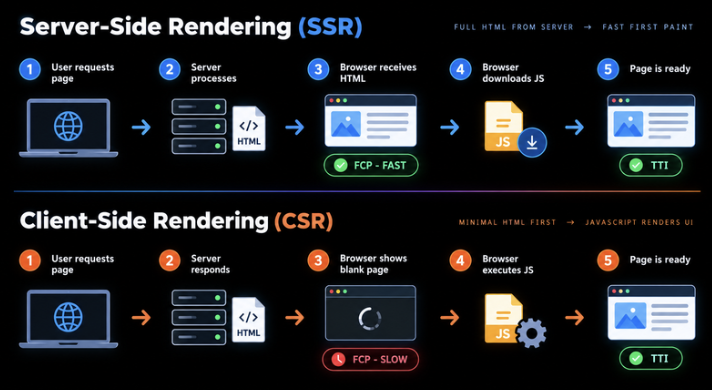
Performance is another example. Image optimization and efficient JavaScript matter, but response times also depend on APIs, databases, third-party services and infrastructure. The article on why website speed matters for businesses explains why performance should be treated as a business concern rather than a late technical optimization.
Design APIs and Integrations Around Complete Journeys
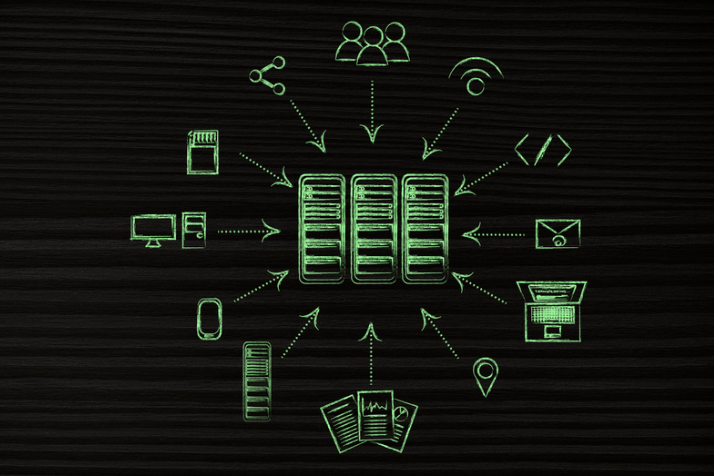
Modern websites frequently connect to CRM, ERP, payment, analytics, identity, support, inventory and marketing platforms. Those connections can create powerful experiences, but they also increase failure points.
This joined-up approach is particularly valuable when a journey crosses several systems. Teams can map what the user is trying to achieve, identify which systems contribute data or actions, and design fallback behavior when an external service is slow or unavailable.
For example, a B2B customer portal might need to:
- authenticate the user;
- retrieve account information;
- display orders from an ERP;
- show invoices from a finance system;
- allow a support request to enter a service platform;
- record activity for analytics.
If each integration is designed independently, the portal may expose inconsistent data, duplicate records or confusing error messages. Integration architecture should support the user journey, not force the user journey to follow system boundaries.
Businesses deciding how content and application services should interact may also find the comparison of headless CMS and traditional CMS useful when planning a more composable digital architecture.
Build Performance and Scalability Into the Architecture
Scalability is not only about surviving a sudden traffic spike. It also means allowing the product to grow without every new feature making the system slower, more fragile or harder to release.
Good full stack website development considers:
- database indexing and query patterns;
- caching;
- content delivery;
- asynchronous processing;
- API efficiency;
- infrastructure scaling;
- deployment automation;
- monitoring and alerting.
A product serving users across the United States may also need infrastructure decisions that account for geographic distribution, third-party dependencies and peak demand. Cloud architecture can help, but moving workloads to the cloud does not automatically solve inefficient application design.
The approved guide to cloud development for Chicago businesses provides relevant context for organizations considering how cloud services can support scalable digital operations.
Performance should be treated as an architectural requirement with measurable targets, not a clean-up task after launch.
Where Full Stack Web Development Reduces Delivery Friction
Fragmented delivery can create avoidable handoffs. A front-end team may wait for an API that does not match its requirements. Back-end developers may implement logic without seeing how users encounter errors. Infrastructure decisions may be made without understanding peak application behavior.
Shared full-stack planning reduces these gaps by making dependencies explicit before implementation.
This does not mean removing specialist ownership. It means establishing common standards for:
- architecture and coding conventions;
- API contracts;
- environments and deployment;
- automated testing;
- security reviews;
- performance budgets;
- monitoring;
- documentation.
The result is a development process where specialists can move independently without building incompatible parts.
Security Must Span the Whole Stack
Digital trust can be weakened by a vulnerability at any layer. Authentication might be secure while an API exposes too much information. A well-protected server can still be affected by an unsafe dependency in the browser. Weak permissions can expose data even if the database itself is configured correctly.
Security planning should therefore cover the complete application lifecycle: user input, identity, APIs, data storage, dependencies, secrets, infrastructure, deployment and monitoring.
The article on protecting your website from cyber attacks provides additional considerations for building a broader website security process.
Security works best when it is part of architecture and delivery rather than a final release checklist.
U.S. Scenario: A Multi-State Professional Services Platform
Consider a professional services company operating across several U.S. states. Its website has grown from a marketing site into a platform that includes location pages, consultation booking, customer login, document exchange and CRM integration.
The user experience begins to suffer because each feature was added separately. Forms use different validation rules, account data loads slowly, location information is managed in several places, and marketing teams depend on developers for routine updates.
Full Stack Web Development can address the underlying structure rather than redesigning only the visible pages. The team could establish a consistent front-end component system, define reusable APIs, consolidate content models, improve database queries and connect the CRM through a controlled integration layer.
The business benefit is a digital platform that is easier to evolve because user experience and technical architecture are being improved together.
U.S. Scenario: A SaaS Product Scaling Beyond Its MVP
A U.S. SaaS company may launch an MVP quickly using a small team and a straightforward application architecture. As adoption grows, the product accumulates new dashboards, permissions, billing logic, integrations and reporting features.
At that stage, problems may appear as inconsistent UI behavior, long page loads, duplicated logic and releases that introduce unexpected side effects.
A Full Stack Web Development review can identify whether the problem sits in interface architecture, APIs, data models, infrastructure or the way those layers interact. The priority should not automatically be a rewrite. Teams may achieve more value by separating specific services, standardizing APIs, improving test coverage or modernizing selected parts of the application.
For organizations deciding how to resource this work, the comparison of in-house versus outsourced website development can help frame ownership, expertise and capacity decisions.
Make Testing Reflect Real System Behavior
Testing individual components is necessary but insufficient. Digital experiences fail where layers interact, so quality assurance should cover complete user journeys.
A practical test strategy may combine:
- unit tests for individual logic;
- API and integration tests;
- front-end component tests;
- end-to-end tests for critical journeys;
- performance tests;
- security testing;
- monitoring after deployment.
Teams should also test failure conditions. What happens when a payment service times out? Can a user safely retry a form? What does the interface show if customer data is temporarily unavailable?
Resilient digital products are designed to handle failure clearly, not simply to work under perfect conditions.
How Dev Centre House Can Support Full-Stack Delivery in the United States
Dev Centre House can support U.S. organizations with discovery, architecture, front-end and back-end engineering, API development, system integration, cloud planning, testing and modernization.
For a Full Stack Web Development engagement, the work can begin by mapping the highest-value user journeys and identifying the technical dependencies behind them. From there, teams can prioritize architecture changes, performance improvements, integration work or new functionality based on business impact rather than rebuilding technology unnecessarily.
The goal is to create a maintainable digital product in which interface quality, application logic, data and infrastructure reinforce one another.
Conclusion
Better digital experiences come from more than attractive screens. They depend on fast data access, reliable workflows, resilient integrations, appropriate security and infrastructure that can support real user demand.
For U.S. organizations, Full Stack Web Development provides a practical way to treat those concerns as one connected product problem. Leaders should assess the complete journey, identify where technical boundaries are creating customer friction and prioritize improvements that make the platform easier to use, operate and evolve.
FAQs
1. What is Full Stack Web Development?
It is an approach to building web products across the front end, back end, data, integrations and supporting infrastructure, with these layers designed to work together.
2. What does a full stack web developer typically work on?
Responsibilities can include user interfaces, server-side application logic, APIs, databases and deployment-related tasks, although larger projects normally use specialists across these areas.
3. Is full stack development suitable for enterprise websites?
Yes, but enterprise delivery normally requires specialized expertise across architecture, security, cloud, testing and integrations rather than relying on one developer to own every discipline.
4. How does full stack website development improve performance?
It allows teams to examine performance across the browser, APIs, application logic, database and infrastructure instead of optimizing only the visible interface.
5. When should a company consider Full Stack Web Development support?
It is particularly useful when digital experience problems cross multiple technical layers, integrations are becoming difficult to maintain, or a product needs coordinated modernization.