In the fiercely competitive landscape of technological innovation, the ability to rapidly conceptualise, build, and deploy Artificial Intelligence solutions is no longer a luxury, but a fundamental requirement for market leadership. For startups, particularly those operating within vibrant innovation hubs such as Trondheim, Norway, the imperative to deliver AI-driven Minimum Viable Products (MVPs) quickly and […]
In the fiercely competitive landscape of technological innovation, the ability to rapidly conceptualise, build, and deploy Artificial Intelligence solutions is no longer a luxury, but a fundamental requirement for market leadership. For startups, particularly those operating within vibrant innovation hubs such as Trondheim, Norway, the imperative to deliver AI-driven Minimum Viable Products (MVPs) quickly and efficiently often clashes with the practical constraints of limited resources and lean engineering teams. The conventional approach of extensive in-house development for complex AI systems can be a significant bottleneck, delaying market entry and consuming valuable capital.
This challenge is precisely where strategic innovation comes into play. Trondheim’s burgeoning tech ecosystem is demonstrating a sophisticated understanding of how to circumvent these traditional hurdles. By leveraging intelligent technological choices and streamlined development methodologies, these agile companies are successfully integrating cutting-edge AI capabilities into their offerings, proving that groundbreaking AI MVPs can indeed be shipped without the immediate necessity of scaling up engineering teams to an unwieldy size. This article explores the strategic pillars enabling this remarkable efficiency.
Overview of MVP Development in Norway
Norway, particularly its technology epicentre Trondheim, has cultivated a robust environment for startup growth and innovation. The focus here is often on high-tech solutions, deep tech, and areas such as marine technology, energy, and health tech, where AI offers transformative potential. MVP development in this context is characterised by a strong emphasis on validation, iterative improvement, and a pragmatic approach to resource allocation. The goal is to quickly bring a core value proposition to market, gather user feedback, and iterate, rather than embarking on lengthy, high-risk development cycles. This lean philosophy is particularly critical when integrating advanced technologies like AI, where the learning curve and infrastructure requirements can be substantial. Trondheim’s startups are exemplifying how to blend ambitious AI goals with lean development principles, setting a benchmark for efficient innovation.
The Strategic Imperative: AI Integration with Lean Resources
The core challenge for many startups is integrating advanced AI functionalities without incurring prohibitive costs or expanding engineering teams beyond sustainable limits. Traditional AI development demands significant expertise in machine learning, data science, infrastructure management, and MLOps. For a startup, hiring a full team across these specialisations can be financially unfeasible and time-consuming, diverting focus from core product development and market validation. The dilemma is clear: how to harness the power of AI to create a competitive advantage and deliver a compelling MVP, whilst maintaining agility and financial prudence. Trondheim’s innovative companies are addressing this by strategically rethinking their approach to AI development, focusing on external efficiencies and internal productivity enhancements.
Hosted AI Services Reduce Infrastructure Complexity
One of the most significant enablers for Trondheim’s lean AI development is the strategic adoption of hosted AI services. Building and maintaining a robust AI infrastructure from scratch, including data pipelines, model training environments, and deployment platforms, requires substantial investment in both capital and specialised personnel. Cloud providers such as AWS, Google Cloud, and Azure offer an extensive suite of managed AI services, ranging from pre-trained models for specific tasks (e.g., natural language processing, computer vision) to scalable machine learning platforms (e.g., SageMaker, Vertex AI). By leveraging these services, startups can abstract away much of the underlying infrastructure complexity. This means engineering teams can focus on integrating AI capabilities into their applications and refining algorithms, rather than managing servers, scaling resources, or troubleshooting complex deployment issues. The pay-as-you-go model also aligns perfectly with startup budgets, allowing for scalable costs that grow with usage, rather than demanding large upfront investments.
AI Copilots Improve Developer Productivity
The advent and rapid maturation of AI copilots represent another transformative factor in enhancing developer productivity within lean teams. Tools like GitHub Copilot, Amazon CodeWhisperer, and similar intelligent coding assistants are revolutionising the development workflow. These AI-powered tools assist developers by suggesting code snippets, completing functions, identifying potential bugs, and even generating entire blocks of code based on natural language prompts. For startups with limited engineering bandwidth, this translates directly into faster development cycles. Developers can write code more efficiently, reduce time spent on boilerplate tasks, and quickly prototype new features. This augmentation of human intelligence allows a smaller team to achieve the output typically associated with a larger group, enabling the rapid iteration and feature development essential for an AI MVP. The impact is not merely quantitative; it also frees up developers to focus on higher-level architectural decisions and complex problem-solving, further accelerating innovation.
Lean Teams Prioritise Rapid Feature Validation
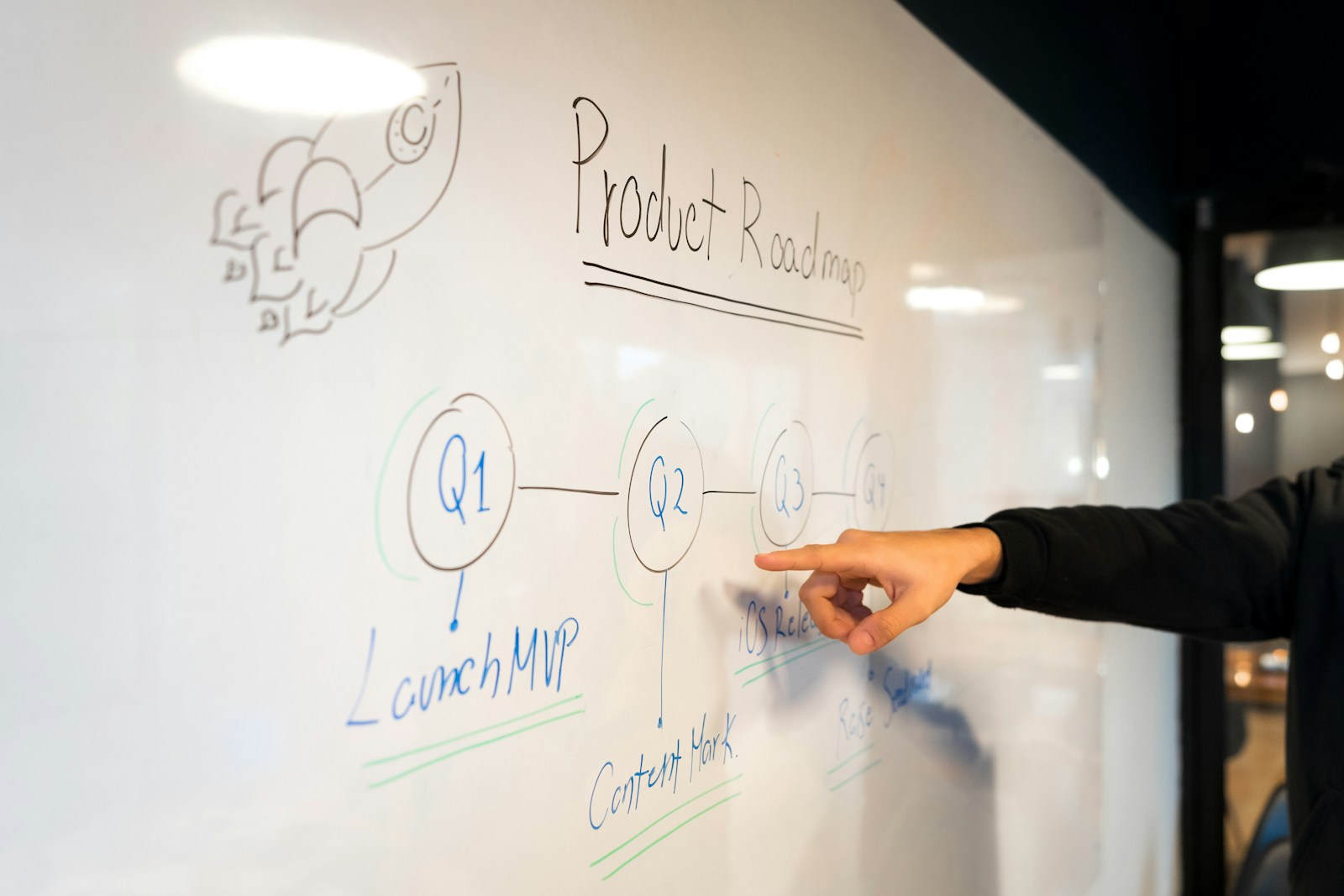
The philosophy of lean startup methodologies is intrinsically linked to the success of Trondheim’s AI MVP initiatives. For these companies, the emphasis is firmly on rapid feature validation. Instead of building out a comprehensive, feature-rich product before launch, lean teams focus on identifying the absolute core functionality that delivers value and addresses a specific market need. This involves defining a clear hypothesis, building the smallest possible AI-powered feature to test that hypothesis, and then quickly deploying it to gather user feedback. This iterative build-measure-learn loop is crucial. It minimises wasted development effort, ensures that AI features are genuinely useful, and allows for swift pivots if initial assumptions prove incorrect. By prioritising validation over exhaustive development, lean teams can leverage hosted AI services and AI copilots to quickly integrate, test, and refine AI functionalities, ensuring their MVPs are both innovative and market-aligned without overextending their engineering resources.
How Dev Centre House Supports Trondheim Startups
At Dev Centre House, we understand the unique challenges faced by Trondheim’s innovative startups in bringing AI-powered MVPs to market. Our expertise in MVP development is tailored to help companies navigate these complexities with efficiency and strategic foresight. We specialise in leveraging hosted AI services, integrating AI copilots into development workflows, and implementing lean methodologies to ensure rapid feature validation. Our team acts as an extension of your engineering department, providing the necessary expertise in AI integration, cloud architecture, and agile development, without the overhead of permanent hires. We empower Trondheim startups to accelerate their product development cycles, reduce time-to-market, and build scalable, intelligent solutions that resonate with their target audience, all while maintaining a focus on cost-effectiveness and sustainable growth.
Conclusion
The success of Trondheim’s startups in shipping AI MVPs without expanding engineering teams is a testament to intelligent resource allocation, strategic technology adoption, and a disciplined approach to product development. By embracing hosted AI services, integrating AI copilots, and adhering to lean principles focused on rapid feature validation, these companies are demonstrating a powerful model for innovation. This approach not only enables them to overcome the typical constraints of startup environments but also positions them at the forefront of AI-driven product development. The lessons learned from Trondheim’s vibrant tech scene offer valuable insights for any organisation aiming to integrate AI efficiently and effectively into their next generation of products and services.
FAQs
What is an AI MVP?
An AI MVP, or Artificial Intelligence Minimum Viable Product, is the version of a new product that allows a team to collect the maximum amount of validated learning about customers with the least amount of effort, specifically incorporating core AI functionalities. It focuses on the essential AI features that deliver primary value and addresses a key market need.
How do hosted AI services reduce infrastructure complexity for startups?
Hosted AI services, offered by major cloud providers, abstract away the need for startups to build and maintain their own AI infrastructure. This includes managing servers, scaling resources, handling data pipelines, and deploying machine learning models. Startups can simply consume these services via APIs, significantly reducing operational overhead and allowing engineers to focus on product development.
Can AI copilots truly replace human developers?
No, AI copilots are designed to augment, not replace, human developers. They act as intelligent assistants, helping with code generation, error detection, and boilerplate tasks. This enhances productivity and allows developers to focus on more complex problem-solving, architectural design, and creative aspects of software development, rather than eliminating the need for human expertise.
Why is rapid feature validation crucial for AI MVPs?
Rapid feature validation is crucial for AI MVPs because AI technology can be complex and expensive to develop. By quickly validating core AI features with real users, startups can confirm market demand, gather critical feedback, and iterate efficiently. This minimises the risk of building unwanted features, reduces wasted resources, and ensures the AI solution genuinely addresses user needs.
How can Dev Centre House assist my startup in Trondheim with AI MVP development?
Dev Centre House assists Trondheim startups by providing expert MVP development services focused on AI integration. We leverage hosted AI services, implement AI copilots for enhanced productivity, and apply lean methodologies for rapid feature validation. Our team acts as a strategic partner, extending your engineering capabilities and accelerating your AI product’s journey from concept to market.