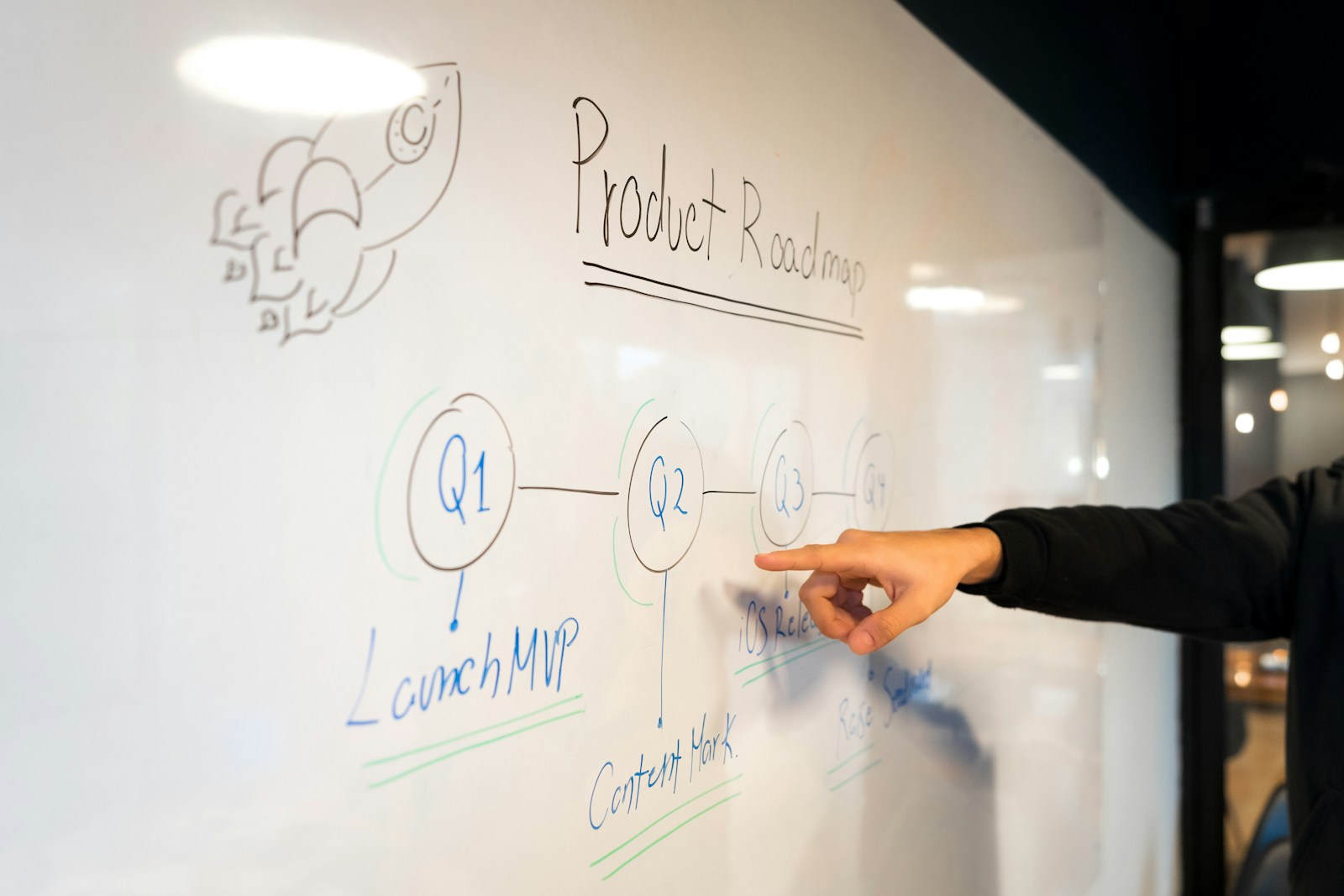
In the fiercely competitive landscape of modern technology, the initial strategic decisions made by a startup can dictate its long-term viability and ultimate success. For technology leaders and CTOs in Galway, a city rapidly establishing itself as a vibrant tech hub, the imperative to launch robust, scalable, and future-proof products from day one has never […]
In the fiercely competitive landscape of modern technology, the initial strategic decisions made by a startup can dictate its long-term viability and ultimate success. For technology leaders and CTOs in Galway, a city rapidly establishing itself as a vibrant tech hub, the imperative to launch robust, scalable, and future-proof products from day one has never been more critical.
This evolving reality has propelled a significant shift, a growing number of Galway-based startups are now unequivocally prioritising cloud-native Minimum Viable Product (MVP) development. This approach is not merely a trend; it represents a fundamental re-evaluation of how early-stage products are conceived, built, and deployed, offering distinct advantages that resonate deeply with the demands of rapid innovation and sustainable growth.
Overview of MVP Development in Ireland
Ireland’s tech ecosystem, particularly in burgeoning centres like Galway, is characterised by agility and a strong inclination towards innovation. MVP development, as a core strategy, allows startups to validate their core hypotheses with minimal resources and time, gathering crucial user feedback to inform subsequent iterations. Historically, MVPs might have been built on more traditional, monolithic architectures, often leading to technical debt and scalability bottlenecks as the product matured.
However, the paradigm is shifting. The Irish tech scene, aware of global best practices and the rapid evolution of cloud technologies, is increasingly embracing cloud-native principles from the outset. This move is driven by a pragmatic understanding that while an MVP should be minimal, its underlying architecture must be robust enough to support rapid scaling and feature expansion without requiring complete overhauls. Galway, with its strong talent pool and supportive startup community, is at the forefront of this transition, recognising that a well-architected MVP is not just about getting to market quickly, but about building a foundation for enduring success.
The Strategic Imperative for Early Scalability
The early stages of a startup are often characterised by uncertainty and the need for rapid adaptation. While traditional MVP approaches focus on core functionality, they often defer scalability considerations, leading to potential crises when product-market fit is achieved and user adoption spikes. This reactive approach can be costly, time-consuming, and can even jeopardise a startup’s momentum.
Galway startups are increasingly recognising that deferring scalability is a false economy. The modern digital landscape demands applications that can handle fluctuating loads, integrate seamlessly with other services, and be deployed with high availability from the outset. Building an MVP with scalability in mind is no longer a luxury, but a strategic imperative that safeguards future growth and reduces the likelihood of expensive architectural refactors down the line. It’s about proactive engineering that anticipates success rather than scrambling to accommodate it.
Cloud-Native Systems Improve Scalability From Launch Stages
One of the most compelling reasons Galway startups are gravitating towards cloud-native MVP development is the inherent scalability it provides from day one. Unlike traditional architectures where scaling often involves significant hardware investment and complex reconfigurations, cloud-native systems are designed for elastic scalability.
By leveraging microservices, containers, and serverless functions, these MVPs can automatically adjust resources based on demand. This means that whether a product experiences a sudden surge in user traffic or operates at a steady, lower volume, the underlying infrastructure can adapt efficiently. For a startup, this translates into significant advantages: reduced operational overhead, optimised resource utilisation, and the ability to handle unpredictable growth without service degradation. This proactive approach to scalability mitigates the risk of an MVP failing under the weight of its own success, ensuring a smooth transition from initial validation to widespread adoption. It allows CTOs to focus on product innovation rather than infrastructure firefighting.
AI-Ready Architecture Reduces Future Rework Requirements
The integration of Artificial Intelligence (AI) and Machine Learning (ML) is no longer a distant future goal; it is a current expectation for many innovative products. Galway startups understand that building an MVP today with an eye on future AI integration is a critical differentiator. Cloud-native architectures inherently provide an AI-ready foundation, significantly reducing the need for extensive rework later.
Cloud platforms offer robust, managed services for data ingestion, processing, and AI model deployment, such as machine learning APIs, serverless computing for inference, and scalable data warehousing. By adopting a cloud-native approach, startups can design their data pipelines and service interactions in a way that naturally supports the consumption and generation of data necessary for AI. This foresight means that when the time comes to embed sophisticated AI capabilities, the architectural groundwork is already in place, avoiding costly and time-consuming refactoring projects. It empowers startups to evolve their products with advanced intelligence more seamlessly and efficiently.
Faster Deployment Cycles Improve Early Product Validation
In the startup world, speed to market and rapid iteration are paramount. Cloud-native MVP development excels in delivering significantly faster deployment cycles, which is crucial for early product validation. The modular nature of microservices, coupled with containerisation and CI/CD (Continuous Integration/Continuous Delivery) pipelines, allows for independent development, testing, and deployment of individual components.
This agility means that new features, bug fixes, or experimental functionalities can be pushed to production much more quickly and with greater reliability than with monolithic applications. For Galway startups, this translates into an accelerated feedback loop: ideas can be prototyped, deployed, tested with real users, and iterated upon in a matter of days or even hours, rather than weeks. This continuous validation process not only refines the product faster but also reduces the risk of building features that users do not need, ultimately saving time and resources and ensuring the MVP evolves into a truly valuable solution.
How Dev Centre House Supports Galway Startups
Dev Centre House understands the unique challenges and opportunities faced by Galway’s vibrant startup community. Our expertise in cloud-native MVP development is specifically tailored to meet the demands of rapid innovation, scalability, and future-proofing. We partner with CTOs and tech leaders to design and implement robust, agile, and cost-effective solutions that leverage the full power of cloud technologies.
From initial architectural design to continuous deployment, our team ensures that your MVP is not just functional, but built on a foundation that supports exponential growth and seamless AI integration. We focus on creating modular, resilient systems that enable faster validation, reduce technical debt, and position your product for long-term success in the competitive global market. With Dev Centre House, Galway startups gain a strategic technology partner dedicated to transforming visionary ideas into market-leading products.
Conclusion
The decision by Galway startups to prioritise cloud-native MVP development is a clear indicator of a forward-thinking approach to product innovation. By embracing architectures that inherently offer superior scalability from launch, facilitate AI-ready foundations, and enable faster deployment cycles, these companies are not just building products; they are building resilient, adaptable, and future-proof businesses.
This strategic shift underscores a deep understanding that early architectural choices have profound long-term implications. For CTOs and tech leaders navigating the dynamic startup ecosystem, adopting a cloud-native mindset for MVP development is no longer optional, but a fundamental requirement for achieving sustained growth, competitive advantage, and ultimately, market leadership. Galway’s tech scene is demonstrating that a well-conceived MVP is the bedrock of enduring success.
FAQs
What exactly is cloud-native MVP development?
Cloud-native MVP development involves building a Minimum Viable Product using modern cloud computing principles and technologies. This typically includes microservices architecture, containerisation (e.g., Docker, Kubernetes), serverless functions, and CI/CD pipelines, all hosted on a cloud platform. The goal is to create a highly scalable, resilient, and agile application from the very first iteration.
How does cloud-native architecture improve scalability for a startup?
Cloud-native architectures enhance scalability by allowing individual components (microservices) to scale independently. Resources can be automatically provisioned or de-provisioned based on demand, meaning the application can handle sudden traffic spikes without manual intervention or performance degradation. This elasticity is crucial for startups experiencing unpredictable growth, as it optimises resource usage and reduces operational costs.
Why is an “AI-ready” architecture important for an MVP?
An AI-ready architecture ensures that your MVP’s data structures, services, and infrastructure are designed to easily integrate Artificial Intelligence and Machine Learning capabilities in the future. This reduces the need for costly and time-consuming architectural overhauls when you decide to add AI features, allowing for a more seamless and efficient evolution of your product with advanced intelligence.
What are the main benefits of faster deployment cycles for an MVP?
Faster deployment cycles, enabled by cloud-native tools and CI/CD, allow startups to rapidly test new features, gather user feedback, and iterate on their product. This accelerated feedback loop is vital for early product validation, helping to quickly identify what resonates with users and what needs adjustment, thereby reducing development waste and increasing the chances of achieving product-market fit sooner.
How does Dev Centre House specifically assist Galway startups with cloud-native MVPs?
Dev Centre House provides end-to-end expertise in designing, developing, and deploying cloud-native MVPs. We work closely with Galway startups to establish scalable architectures, implement robust CI/CD pipelines, integrate AI-ready foundations, and ensure security and performance. Our focus is on delivering a high-quality, future-proof MVP that accelerates market validation and supports long-term business growth.