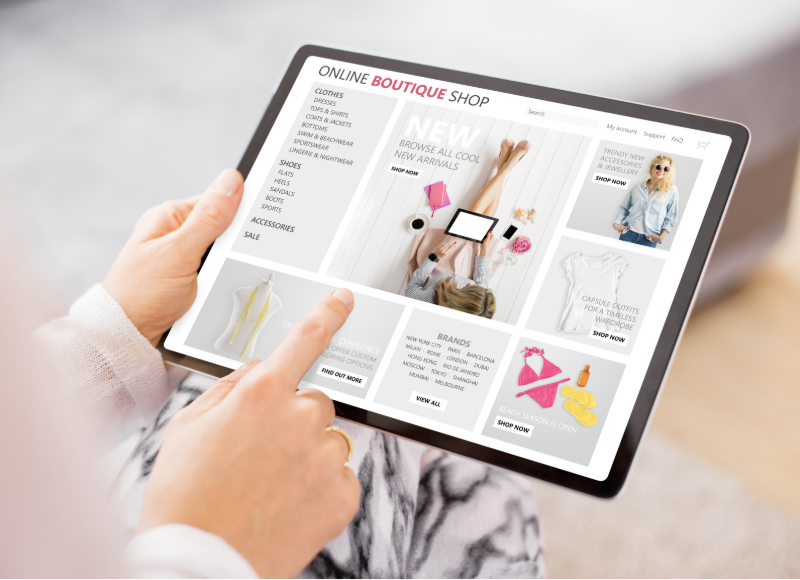
Discover the essential ecommerce website features that can reduce friction, build customer trust, and increase conversions, from faster performance and mobile-first design to smarter search, personalised recommendations, and streamlined checkout.
Getting a visitor to your online store is only half the battle. The real question is what happens once they land on your homepage or a product page, do they browse, add to cart, and check out, or do they bounce within seconds? For most e-commerce businesses, the difference comes down to a handful of specific website features that remove friction at exactly the moments customers are most likely to hesitate.
This guide breaks down the best ecommerce website features that actually move the needle on conversions in 2026, from speed and checkout design to personalization and trust signals, along with the data behind why each one matters. If you’re also looking at your site more broadly, our guide to must-have business website features covers the foundational elements every business site needs, beyond e-commerce specifically.
Why Conversion-Focused Features Matter More Than Ever
Online shoppers have less patience and more options than ever before. If your site is slow, confusing, or makes checkout harder than it needs to be, visitors won’t stick around to figure it out, they’ll simply buy from a competitor instead.
The good news is that conversion optimization isn’t about chasing every new trend. It’s about removing friction from the buying journey at each stage: discovery, evaluation, and checkout. The features below are organized around exactly that journey.
E-commerce User Behavior: Trends and Stats Worth Knowing
The numbers make it clear how much small technical and design decisions affect revenue:
- Site speed has a direct, measurable impact on conversions. A load time improvement of just 0.1 seconds has been shown to lift conversion rates by as much as 8.4% for retail sites, while a one-second delay can cut conversions by roughly 7%.
- Mobile now dominates e-commerce traffic. More than half of all e-commerce traffic comes from mobile devices, and a majority of shoppers expect pages to load in two to three seconds or less.
- Forced account creation is a major checkout killer. Around 19% of shoppers abandon their cart specifically because a store requires them to create an account before completing a purchase.
- Trust signals reduce hesitation before it builds. Social proof on product listing pages, upfront shipping costs, and clearly visible return policies all help reassure shoppers before they reach checkout, often the difference between “add to cart” and “leave the site.”
At Dev Centre House, we’ve worked with e-commerce and retail businesses across Ireland and Europe to diagnose exactly these kinds of friction points and in most cases, the fix isn’t a full redesign, but a handful of targeted improvements to the features covered below.
Essential Ecommerce Website Features Every Store Needs
These are the foundational, essential ecommerce website features that directly affect whether a visitor completes a purchase.
Fast Page Load Speed
Every extra second of load time costs you sales. Optimized images, efficient code, and reliable hosting infrastructure aren’t optional for e-commerce they’re directly tied to revenue.
Mobile-First, Thumb-Friendly Design
With mobile now driving the majority of e-commerce traffic, your site needs to be built mobile-first, not just “mobile responsive.” That means thumb-zone navigation, sticky add-to-cart buttons, and layouts designed for one-handed browsing.
Guest Checkout
Requiring account creation before checkout is one of the fastest ways to lose a sale. Offering a guest checkout option, with the choice to create an account afterward, removes a major point of friction.
Multiple Payment Options
Shoppers expect to pay however they prefer, whether that’s credit card, digital wallets like Apple Pay or Google Pay, or buy-now-pay-later services. The fewer payment barriers you introduce, the higher your completion rate.
Clear, Upfront Pricing
Hidden shipping costs or fees revealed only at the final checkout step are one of the most common reasons for cart abandonment. Showing total costs early builds trust and reduces last-minute drop-off.
Smart Product Search
Search functionality that understands natural language, corrects spelling mistakes, and surfaces relevant results helps shoppers find what they want faster, which typically leads to larger orders and higher conversion rates.
Basic Ecommerce Website Features for Building Trust
Beyond the core conversion mechanics, these are basic ecommerce website features that shoppers need to feel reassured before they commit to a purchase, especially with brands they haven’t bought from before.
Customer Reviews and Ratings
Visible reviews on product pages build credibility and answer questions before a shopper has to ask them. User-generated content, including customer photos, adds another layer of authenticity.
Clear Return and Refund Policies
Highlighting your return policy near the “Add to Cart” button reassures hesitant buyers that there’s little risk in trying your product.
Security Badges and Trust Signals
SSL certificates, recognizable payment logos, and security badges at checkout reduce anxiety around sharing payment information, particularly for first-time customers.
Modern Ecommerce Website Features Worth Adding
Once the fundamentals are covered, these modern ecommerce website features can meaningfully lift conversion rates further.
Cart Abandonment Recovery
Exit-intent popups or automated reminder emails targeted at shoppers who add items to their cart but don’t complete checkout can recover a meaningful share of otherwise-lost sales.
Personalization and Product Recommendations
Showing relevant product recommendations based on browsing or purchase history increases average order value and encourages repeat visits.
Live Chat Support
Live chat lets shoppers get quick answers to questions that a FAQ page can’t anticipate, keeping them engaged in the buying process instead of abandoning it to search elsewhere.
AI-Powered Visual Search and Configurators
For certain product categories, letting customers search by image or configure a product visually (color, size, bundle options) removes uncertainty and increases confidence in the purchase.
Real-Time Inventory and Stock Visibility
Showing accurate stock levels, including “only a few left” indicators where genuinely true, creates urgency while avoiding the frustration of purchasing an item that turns out to be unavailable.
Ecommerce Website Features and Functionality by Page Type
Different pages on your store carry different weight in the buying journey, so it helps to think about ecommerce website features and functionality page by page rather than as one long checklist:
- Homepage: fast load time, clear value proposition, intuitive navigation to key categories.
- Product pages: high-quality images, reviews, real-time stock visibility, and a visible add-to-cart CTA.
- Cart page: transparent pricing, upsell/cross-sell suggestions, and a clear path to checkout.
- Checkout page: guest checkout, multiple payment options, and minimal form fields to reduce drop-off.
Mapping features to the page where they matter most makes it easier to prioritize fixes without trying to overhaul the entire site at once.
How to Prioritize E-commerce Features on a Budget
Not every store can implement everything at once. Here’s a practical way to sequence investment so you’re focusing on the best ecommerce website features for your stage of growth:
- Fix foundational friction first – speed, mobile experience, guest checkout, and transparent pricing. These affect every visitor, regardless of traffic source.
- Layer in trust signals next – reviews, return policies, and security badges are relatively low-cost to implement and directly reduce hesitation.
- Add advanced features as you scale – personalization, cart recovery automation, and visual search tend to deliver the strongest ROI once your foundational experience is already solid.
If you’re unsure where your store currently loses the most sales, working with an ecommerce web design team can help you audit the funnel and prioritize fixes based on actual data rather than guesswork. It’s also worth understanding why web design is important more broadly, many of the same principles that build trust and credibility on a business website apply directly to e-commerce conversion.
Final Thoughts
Higher e-commerce conversions rarely come from one big redesign, they come from systematically removing friction at each stage of the buying journey. Start with the foundational features that affect every visitor, add trust signals to reduce hesitation, and layer in advanced features like personalization and cart recovery as your store grows.
Not sure where your store is losing sales? Contact us for a free consultation and find out which features would make the biggest difference for your conversion rate.
FAQ ITEMS
1. What ecommerce website features help increase conversions?
Key ecommerce features that improve conversions include fast page speed, mobile-first design, simple checkout processes, multiple payment options, product reviews, clear pricing, and personalised shopping experiences.
2. Why is mobile optimisation important for ecommerce websites?
Mobile optimisation is important because many customers browse and purchase through smartphones. A mobile-friendly ecommerce website with simple navigation, fast loading times, and easy checkout helps reduce customer drop-off.
3. How can AI improve ecommerce website conversions?
AI can improve ecommerce conversions through features such as personalised product recommendations, intelligent search, automated customer support, and AI-powered shopping experiences that help customers find relevant products faster.
4. What integrations should an ecommerce website have?
A successful ecommerce website should integrate with systems such as payment gateways, inventory management platforms, fulfilment tools, Customer Relationship Management (CRM) systems, and Enterprise Resource Planning (ERP) solutions to improve operational efficiency.
5. How can Dev Centre House Ireland help businesses improve ecommerce performance?
Dev Centre House Ireland supports businesses with Big Commerce, Web Development, UI/UX Design, Custom Software Development, and AI solutions to create scalable ecommerce platforms that improve customer experience and conversion performance.