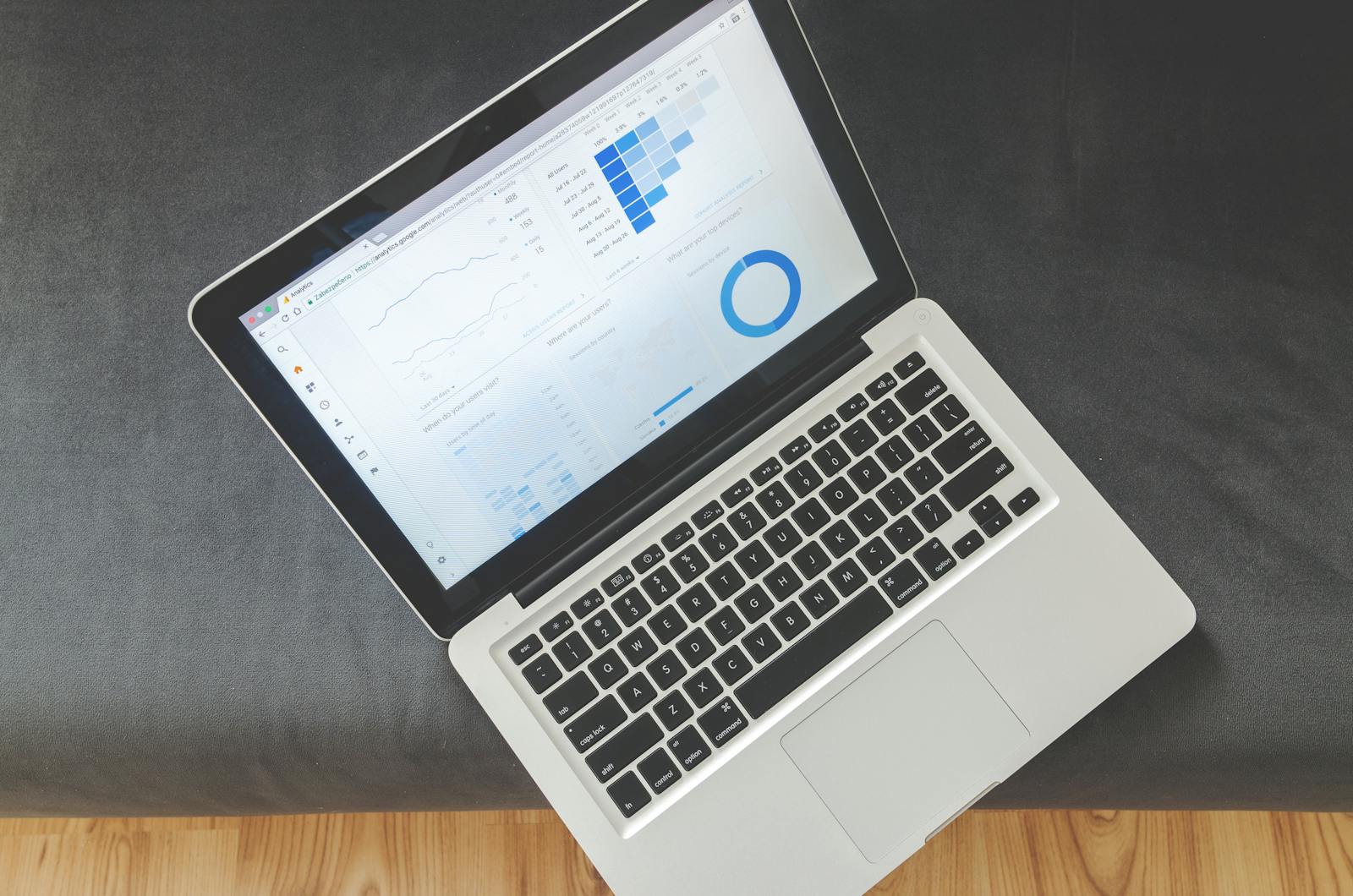
Dublin companies can use AI-powered data visualisation to identify trends faster, access real-time insights, and improve operational decision-making. Interactive dashboards can turn complex data into clearer, more actionable information while helping teams respond more quickly to changing business conditions.
In Dublin’s dynamic business landscape, the demand for actionable insights has never been greater. Companies are constantly seeking more efficient ways to understand their operations, customer behaviour, and market positions. While traditional data dashboards have served as valuable tools for decades, their static nature and often retrospective view can limit their effectiveness in today’s fast-paced environment.
The advent of Artificial Intelligence (AI) is now revolutionising how businesses interact with their data. AI-powered data visualisation tools are emerging as powerful alternatives, offering dynamic, predictive, and interactive experiences that go far beyond conventional reporting. This shift is particularly evident in Dublin, where innovative businesses are embracing these advanced tools to gain a significant competitive edge.
Overview of Data Visualisation in Ireland, Dublin
Data visualisation has long been a critical component of business intelligence strategies across Ireland, with Dublin at the forefront of its adoption. The city’s concentration of multinational corporations, thriving tech sector, and numerous data-driven startups has fostered a sophisticated approach to understanding complex information. Irish businesses have consistently invested in tools and platforms to transform raw data into comprehensible charts, graphs, and reports, enabling better decision-making. This commitment reflects a broader recognition of data’s strategic value, helping companies monitor performance, identify trends, and communicate insights effectively. As the volume and velocity of data continue to grow, the need for more advanced and intuitive visualisation techniques has become increasingly apparent, paving the way for AI-powered solutions to take centre stage.
The Limitations of Static Reporting Workflows
Traditional data dashboards, while foundational, often present data in a static and historical context, limiting their utility for proactive decision-making. These dashboards typically require manual updates, can be cumbersome to navigate for specific insights, and often lack the ability to highlight emerging trends or anomalies without extensive human analysis. For Dublin businesses operating in highly competitive markets, relying solely on static reports can lead to delayed responses to market changes, missed opportunities, and an inability to quickly adapt strategies. The process of generating and distributing these reports can also be time-consuming, consuming valuable resources that could otherwise be directed towards more strategic initiatives.
AI-Driven Dashboards Identify Trends Faster
AI-powered data visualisation tools are fundamentally changing how leaders identify and respond to trends. Unlike traditional dashboards that simply display data, AI algorithms actively analyse vast datasets in real-time, automatically detecting patterns, anomalies, and emerging trends that might be imperceptible to the human eye. These intelligent systems can highlight critical shifts in customer behaviour, market dynamics, or operational performance with remarkable speed and accuracy. For Dublin businesses, this means leadership teams can gain an immediate and comprehensive understanding of their operational landscape, enabling them to make faster, more informed strategic decisions and maintain a competitive edge in a rapidly evolving market.
Real-Time Insights Replace Static Reporting
The shift from static reporting workflows to real-time insights is a major driver for Dublin businesses adopting AI-powered data visualisation. Traditional monthly or quarterly reports are being superseded by dashboards that update continuously, providing an up-to-the-minute view of key performance indicators. This immediacy allows organisations to monitor operations as they happen, identify issues the moment they arise, and adjust strategies dynamically. Instead of waiting for a report to be compiled, decision-makers can interact directly with live data, exploring different scenarios and understanding the immediate impact of various factors. This capability significantly reduces the lag between data generation and insight application, fostering a more agile and responsive business environment.
Quicker Access to Operational Intelligence
Businesses in Dublin are increasingly seeking quicker access to operational intelligence, and AI-powered data visualisation tools are providing precisely that. These advanced systems consolidate data from disparate sources, process it through intelligent algorithms, and present it in highly intuitive, interactive visual formats. This allows users, from frontline managers to executive leadership, to drill down into specific areas of interest, ask natural language questions, and receive instant, context-rich answers. The result is a democratisation of data, empowering a wider range of employees to access and understand critical operational insights without needing extensive analytical training, thereby accelerating problem-solving and fostering a data-driven culture throughout the organisation.
How Dev Centre House Supports Dublin Businesses
Dev Centre House specialises in developing bespoke AI-powered data visualisation solutions tailored to the specific needs of Dublin enterprises. Our team of expert developers and data scientists works closely with clients to design and implement cutting-edge dashboards that transform raw data into actionable, real-time insights. We focus on creating intuitive, scalable, and secure systems that empower organisations to not only visualise their data but also to leverage AI for predictive analytics and automated trend detection. By partnering with Dev Centre House, Dublin businesses can unlock the full potential of their data, driving efficiency, fostering innovation, and securing a competitive advantage in today’s data-intensive market.
Conclusion
The transition from traditional dashboards to AI-powered data visualisation tools marks a significant evolution for Dublin businesses. By enabling faster trend identification, delivering real-time insights, and providing quicker access to operational intelligence, these advanced solutions are redefining how organisations interact with their data. Embracing AI in data visualisation is no longer a luxury but a necessity for companies aiming to remain agile, make informed decisions, and thrive in Ireland’s competitive economic landscape.
FAQs
What is the main difference between traditional and AI-powered data visualisation?
The main difference lies in their dynamism and intelligence: traditional visualisation is often static and historical, while AI-powered tools actively analyse data, identify trends, offer real-time insights, and can even provide predictive analytics.
How do AI-driven dashboards help identify trends faster?
AI algorithms continuously process large datasets, automatically detecting patterns, anomalies, and emerging trends in real-time, often highlighting insights that human analysts might miss or take longer to discover in traditional reports.
Can AI-powered data visualisation replace human data analysts?
While AI tools significantly enhance and accelerate data analysis, they are designed to augment human capabilities, not replace them. They free up analysts from repetitive tasks, allowing them to focus on higher-level strategic interpretation and decision-making.
Is real-time data visualisation suitable for all business sizes in Dublin?
Yes, while larger enterprises often have more complex data needs, scalable AI-powered data visualisation solutions are becoming increasingly accessible and beneficial for small to medium-sized businesses in Dublin, enabling them to gain similar competitive advantages.
What types of data sources can these AI tools integrate with?
AI-powered data visualisation tools can integrate with a wide variety of data sources, including CRM systems, ERP platforms, financial databases, marketing analytics, IoT sensor data, and even unstructured text data, providing a comprehensive view of business operations.