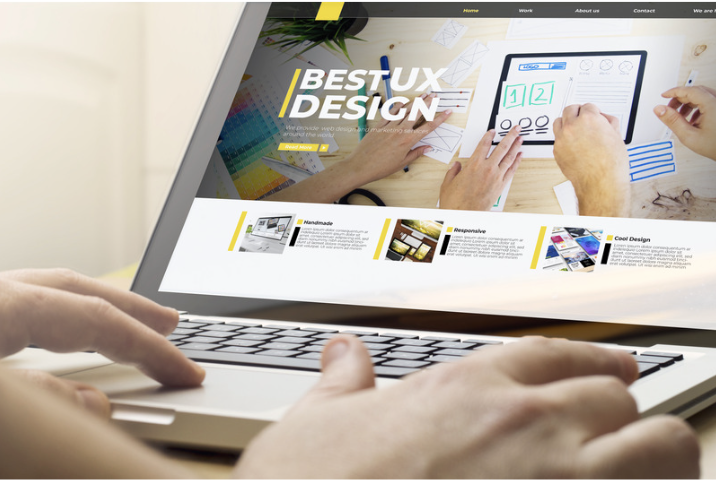
Choosing the right web design agency requires more than comparing portfolios. These questions can help businesses assess experience, process, costs, technology and long-term support.
Hiring a web design agency is an important decision because the website may influence how customers discover, evaluate and interact with a business for years after launch.
A strong portfolio can be useful, but appearance alone does not show how well an agency manages projects, solves technical problems or supports long-term website performance. Businesses should also understand how the agency approaches planning, User Experience (UX), Web Development, testing, integrations and ongoing maintenance.
For organisations in Ireland, asking structured questions before appointing an agency can make it easier to compare providers and avoid unexpected costs or technical limitations later.
What Experience Does the Web Design Agency Have?
The first question should focus on relevant experience rather than simply how long the agency has existed.
An agency may have produced many websites but still have limited experience with a particular industry, business model or technical requirement. A company that needs a straightforward marketing website has different priorities from an organisation requiring ecommerce functionality, customer portals or complex system integrations.
Businesses should ask whether the agency has worked on projects involving similar requirements and what challenges were involved.
Useful questions include:
- Have you delivered websites with similar functionality?
- Have you worked with organisations of a similar size?
- How do you approach unfamiliar industries?
- Can you explain how previous projects solved business problems?
- Which parts of the project are handled internally?
The objective is not necessarily to find an agency that has built an identical website before. It is to understand whether the team can translate business requirements into practical design and technical decisions.
How Do You Approach UX and Web Design?
A website should be designed around users rather than internal preferences.
Ask how the agency develops User Experience (UX) and how it determines navigation, information architecture, page hierarchy and calls to action. Strong agencies should be able to explain why design decisions are made rather than relying only on visual trends.
The process may include discovery workshops, customer research, user journeys, wireframes and prototypes before detailed visual design begins.
Businesses should also ask how responsive behaviour is planned. Responsive web design should account for mobile, tablet and desktop experiences from the beginning rather than shrinking a desktop design after approval.
Accessibility deserves attention as well. Clear typography, appropriate contrast, understandable navigation and usable forms can improve the experience for a wider range of visitors.
A useful question is simple: how will you know whether the design is working for our customers?
The answer should involve business objectives and user behaviour, not simply subjective design preference.
What Is Included in the Project Scope and Price?
Website quotations can be difficult to compare when agencies define scope differently.
One proposal may include strategy, UX/UI design, development, testing and content migration, while another may cover only design and basic implementation. The lower quotation is not necessarily the less expensive project once additional work is included.
Businesses should request a clear breakdown of what is included.
This may cover:
- Discovery and planning
- UX/UI design
- Web Development
- Content Management System (CMS) setup
- Content migration
- Forms and integrations
- Responsive implementation
- Software Testing and Quality Assurance
- Analytics configuration
- Search engine optimisation foundations
- Deployment
- Training
- Post-launch support
It is equally important to ask what is not included.
Third-party applications, premium plugins, stock photography, hosting, domains, payment providers and ongoing maintenance may create additional costs outside the main project fee.
Ask how scope changes are handled as well. A defined process for approving new requirements can prevent disagreements about cost and delivery later.
Which Technology and CMS Will Be Used?
The technology behind the website affects flexibility, maintenance and future development.
Businesses should ask which Content Management System (CMS) the agency recommends and why it suits the project. The decision should reflect actual requirements rather than simply being the platform the agency always uses.
Content teams should understand how easily they will be able to create pages, update content and manage media after launch.
Technical questions are particularly important when the website needs to connect with other business systems. Application Programming Interfaces (APIs) may be needed to integrate CRM platforms, ecommerce systems, booking applications or other internal technology.
Ask whether the architecture can support expected future functionality. An inexpensive website can become costly if every new requirement needs a workaround or major redevelopment.
The agency should also explain who owns the website code, content and accounts after completion. Businesses should avoid arrangements that make it unnecessarily difficult to move hosting or development support in the future.
How Will Performance, SEO and Security Be Handled?
A website can look professional and still perform poorly if technical quality is neglected.
Ask the agency how it approaches page speed, image optimisation, frontend code and third-party scripts. Website performance affects user experience and can become increasingly difficult to correct if inefficient architecture is built into the original project.
Search engine optimisation should also be considered during development. The agency should understand site architecture, page titles, metadata, mobile usability, redirects and technical SEO fundamentals.
For an existing website, migration planning becomes especially important. Changing URLs without appropriate redirects can affect existing search visibility.
Cybersecurity should be discussed directly. Ask how the agency handles access controls, software updates, backups, secure forms and dependencies.
Businesses should also understand who will be responsible for security and updates after launch.
No agency can guarantee that a website will never experience a security issue. A stronger answer is one that explains how security practices are integrated throughout development and ongoing maintenance.
How Are Testing and Approvals Managed?
Testing is one of the clearest indicators of whether a web project is being treated as a professional software delivery process.
Ask what types of testing happen before launch. Software Testing and Quality Assurance may cover browsers, mobile devices, forms, navigation, integrations, responsive behaviour and website performance.
More complex websites may require testing of customer accounts, payment flows, role permissions or third-party integrations.
The approval process matters too. Businesses should understand when they will review wireframes, visual designs, development work and final content.
Ask how feedback should be submitted and how many review rounds are included. Consolidated feedback from identified decision-makers usually keeps projects moving more efficiently than comments arriving independently from several stakeholders.
A clear testing and approval process reduces last-minute surprises and creates accountability on both sides.
What Happens After the Website Goes Live?
Launch is not the end of a website’s lifecycle.
Browsers change, software dependencies require updates, content grows and business requirements evolve. Businesses should ask what happens when the website needs support after launch.
Questions may include:
- Is there a post-launch support period?
- Who handles security updates?
- Can the agency provide ongoing maintenance?
- How are bugs reported and prioritised?
- What happens when new features are required?
- Can another development team maintain the website if necessary?
Maintenance should include more than emergency repairs. Performance optimisation, technical updates and incremental UX improvements can extend the useful life of the website and reduce the need for frequent complete redesigns.
Ask whether the agency offers documentation and training as part of handover. Internal teams should be able to manage routine website tasks without unnecessary dependence on developers.
How Dev Centre House Ireland Supports Web Design Projects
Dev Centre House Ireland can support organisations through the complete website lifecycle, from discovery and UX/UI planning to Web Development, integrations, testing, deployment and ongoing technical improvements.
The process can begin by defining business objectives, customer journeys, functional requirements and technical dependencies before visual design begins. This creates a clearer basis for deciding which features are essential and how the website should support wider business systems.
Where organisations already have digital platforms, work can include content migration, API integration, CMS implementation or Legacy Modernisation. More complex requirements may involve custom software functionality alongside the customer-facing website.
For businesses in Ireland, the objective is to create a website that is practical to manage, aligned with customer needs and capable of supporting future development without unnecessary technical constraints.
Conclusion
Choosing a web design agency should involve more than reviewing visual work or comparing headline prices.
Businesses should ask how each agency approaches UX, Web Development, project scope, technology, performance, SEO, Cybersecurity, testing and ongoing maintenance. Clear answers provide insight into how the agency works and whether its process is likely to support long-term business requirements.
For organisations in Ireland, asking these questions before signing a contract can reduce uncertainty and create a stronger foundation for a successful website project. The right partner should be able to explain both how the website will be designed and how it will remain useful as the organisation continues to evolve.
FAQs
1. What should I ask a web design agency before hiring them?
Ask about relevant experience, project scope, UX process, technology, CMS, performance, SEO, security, testing, ownership and ongoing maintenance.
2. How can I compare web design agency quotations?
Compare what each proposal actually includes rather than focusing only on the final price. Discovery, design, development, testing, migration and support may be priced differently.
3. Should a web design agency also handle development?
It depends on the project, but having design and development coordinated can make it easier to ensure that approved designs are technically practical and implemented consistently.
4. Who should own the website after launch?
Businesses should clarify ownership of code, content, domains, hosting accounts and other website assets before the project begins.
5. How can Dev Centre House Ireland support a web design project?
Dev Centre House Ireland can support discovery, UX/UI design, Web Development, CMS implementation, integrations, testing, deployment and ongoing website improvement.